Loading...
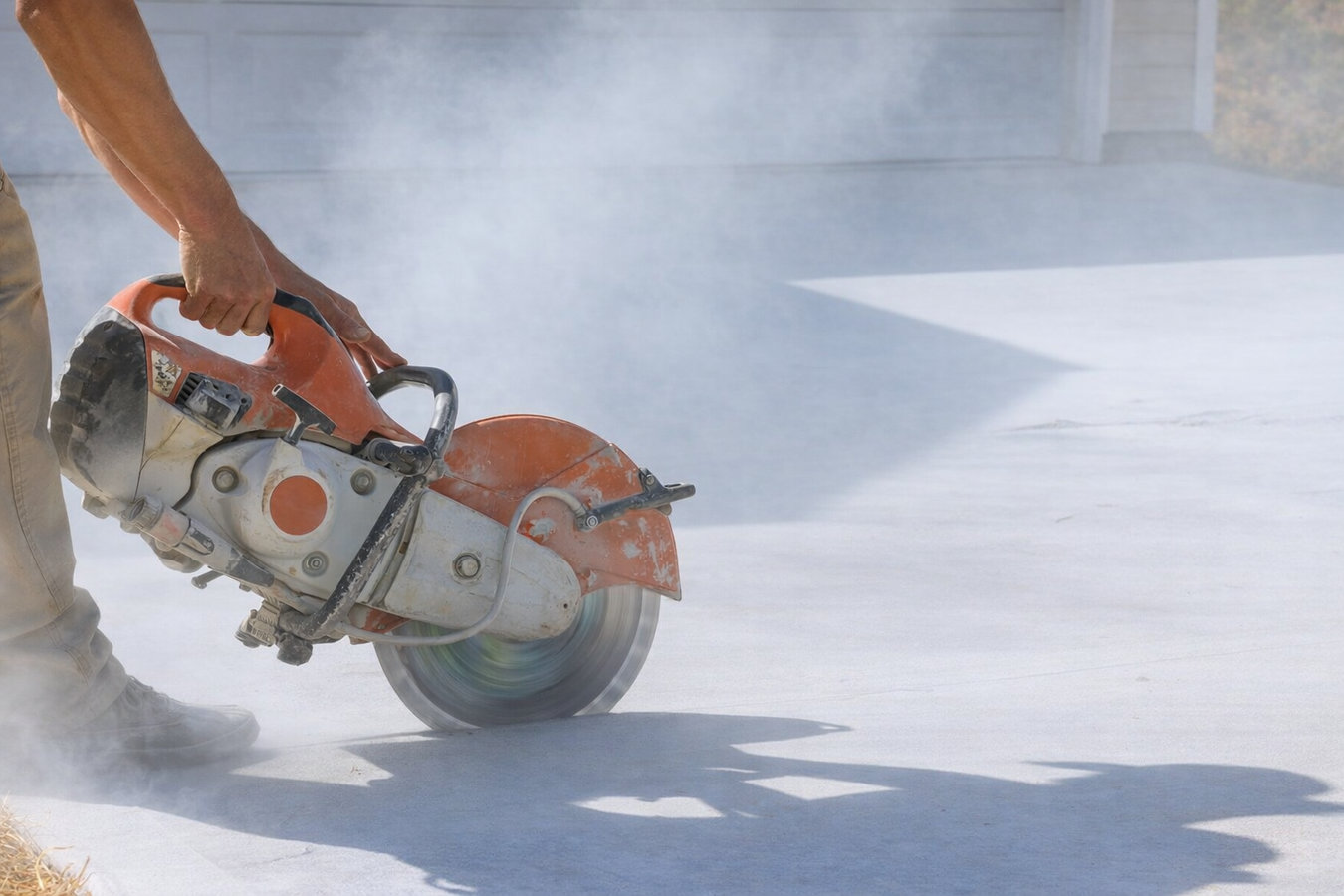
When a plumber needs under-slab access, or a damaged driveway section needs to come out cleanly, you need a concrete saw - not a sledgehammer. We cut precise trenches and openings in Abilene slabs, handle dust suppression, and manage all required permits.
Concrete cutting in Abilene uses diamond-blade saws to slice through existing slabs with clean, controlled lines - most residential plumbing trench jobs take two to four hours of cutting, with patch work following after the downstream trade finishes.
Because almost all homes in Abilene are built on slab foundations, concrete cutting is a routine part of home repair and renovation here. When a pipe breaks under the floor, there is no crawl space to access it from - the slab has to be opened. The same applies to adding new plumbing, installing a floor drain in a garage, or removing a section of driveway that has shifted too far to patch. Concrete cutting is the first step in all of those projects.
The difference between good concrete cutting and poor concrete cutting shows up at the edges. A clean cut leaves straight, smooth sides that accept a patch properly and do not cause surrounding concrete to crack. Once the cutting is done and any needed pipe work or subgrade work is complete, we can handle the patch pour as well, or coordinate with your plumber if they are managing that step. For larger surface removals that lead to a full replacement, our concrete driveway building and concrete floor installation services handle the pour once the old material is out.
If a plumber has told you there is a broken or leaking pipe beneath your concrete floor, concrete cutting is almost certainly part of the repair. In Abilene's slab-on-grade homes, there is no other way to reach those pipes - the slab must be opened, the pipe fixed, and then the slab patched.
Small hairline cracks are normal in any concrete, but if you notice cracks that are widening, have one side higher than the other, or are growing longer over time, the slab has shifted. Abilene's clay soil is a common culprit, and cutting out the damaged section for replacement is often the right fix.
If water collects against your home's foundation after a storm rather than draining away, the slope of your driveway or surrounding concrete may be directing water the wrong way. Cutting and removing a section to regrade or add a drain channel is a common solution for this problem in Abilene homes.
Any time you want to add plumbing that does not already exist - a new bathroom, a utility sink in the garage, or a floor drain - the pipes have to go somewhere. In a slab home that means cutting a trench through the concrete to lay them. This is a planned project rather than an emergency, and one of the most common reasons Abilene homeowners call a concrete cutting contractor.
The most common concrete cutting call we get in Abilene is for a plumbing trench - a plumber has located a broken pipe under the slab and needs us to open a clean line so they can reach it. We mark the cut, set up dust suppression, and make the cut with a flat saw. The opening is sized to give the plumber room to work without removing more slab than necessary, which keeps the patch area smaller and the job cost lower.
Core drilling is used when you need a round hole rather than a trench - for a new pipe, a conduit run, or anchor bolts going through a slab or wall. Each hole is priced individually based on diameter and how thick the concrete is. Driveway section removal is a different kind of job: we cut clean boundary lines around the damaged section so it can be broken out without cracking the adjacent concrete, then the replacement section is poured to match.
We also cut control joints into existing slabs that were poured without them or that need additional joints to manage cracking. Abilene's temperature swings and clay soil movement put constant stress on concrete, and a properly placed control joint directs where the concrete flexes - keeping the crack where you want it rather than where you do not.
The most common residential cut - opens a trench through a floor slab to give plumbers access to pipes underneath, then the opening is patched after the pipe work is done.
Round holes cut through slabs or walls for pipes, conduit, or anchors - priced per hole based on diameter and depth.
Cutting out a damaged, shifted, or improperly sloped section of driveway so it can be removed cleanly and replaced without cracking adjacent concrete.
Planned grooves cut into a freshly poured or existing slab to guide where the concrete flexes, preventing random cracking across your floor or driveway surface.
Abilene's slab-on-grade construction is the norm rather than the exception, and that makes concrete cutting a standard part of home repair work here in a way that does not apply in cities with crawl spaces or basements. When your plumbing is under the slab, any repair or addition eventually means going through the slab. The expansive clay soil that covers most of Taylor County also puts more stress on buried pipes than homeowners in other parts of Texas face, which means under-slab plumbing problems come up more often.
Abilene's summers regularly push past 100 degrees, and that heat affects how older slabs behave during cutting. Concrete that has been baking for decades becomes more brittle at the surface, and a contractor who is not adjusted for those conditions can cause edge crumbling that complicates the patch. Dry conditions also affect dust volume - during a drought, cutting a dry slab without water suppression puts a significant amount of fine silica dust into the air. OSHA's silica dust standards apply to this kind of work, and wet cutting is the method that keeps exposure well within safe limits.
We serve Abilene and the surrounding region, including homeowners in San Angelo, Midland, and Stephenville. Slab construction is standard across all of these West and Central Texas communities, and the same soil and climate conditions that create concrete cutting demand in Abilene apply throughout the region. The Concrete Sawing and Drilling Association provides standards and training for contractors doing this work - ask any contractor you consider whether they are familiar with current CSDA best practices for dust control and blade selection.
Reach out by phone or form. We respond within 1 business day and ask a few questions before quoting - slab thickness, whether there is rebar inside, and what you are trying to accomplish. If we need to see the work in person, we schedule a quick site visit.
For most jobs we visit your property before committing to a price. We check the slab thickness, look for signs of rebar, and assess the concrete's condition - older or more brittle slabs require a different approach. A written estimate follows within a day.
We confirm which permits apply to your project and pull them on your behalf. Before the crew arrives, we ask you to clear furniture and vehicles from the work zone. We set up plastic sheeting to contain dust and debris inside the home.
The crew marks cut lines, sets up equipment, and cuts using water to suppress dust. The cut sections are removed or set aside if they will be patched back in. Before we leave, we walk the job with you to confirm the dimensions and answer any questions about what comes next.
We respond within 1 business day, come to your property to assess the slab at no charge, and give you a written quote covering thickness, dust control method, and what the finished cut will look like. No obligation.
(325) 283-1159We work on Abilene slabs every week and know what West Texas conditions do to concrete over time. Older slabs in this area are often more brittle at the edges due to decades of heat and drought cycles, and we adjust our approach accordingly before a blade ever touches your concrete.
We use water-suppression cutting and seal off work areas with plastic sheeting before we start. Concrete dust contains fine silica particles - a real health concern - and controlling it properly is not optional. Ask any contractor you talk to for a specific dust control plan before you agree to the work.
We know the City of Abilene Development Services permit process and handle it on your behalf. Permitted work protects you at resale and during refinancing - lenders and buyers' inspectors ask questions about slab work, and documentation showing it was done with proper permits is the right answer.
We respond to every inquiry within 1 business day and provide a written estimate that specifies exactly what is included - thickness, rebar considerations, dust control method, and what happens after the cut. No price surprises after we are already into your slab.
Every concrete cutting job we complete in Abilene is handled by a crew that knows the city's permit process, knows what West Texas slabs look like after 40 or 50 years of heat and clay soil movement, and takes dust control seriously from the first cut to the last cleanup. The Texas Department of Licensing and Regulation oversees the licensed trades that often work alongside concrete cutting crews - licensed plumbers, specifically - and we coordinate with TDLR-licensed tradespeople on every job that requires it.
Once a damaged or shifted driveway section has been cut and removed, we handle the full replacement pour - properly graded and thickness-matched to the surrounding surface.
Learn moreAfter a slab has been opened for plumbing work or structural repairs, we pour and finish the replacement section to match the existing floor surface.
Learn moreWe work around your schedule and handle all required permits - call now or submit a form for a free estimate. The sooner the slab is opened, the sooner the repair gets done.