Loading...
Your foundation carries every wall, roof, and floor above it. In Abilene, it also has to handle shrink-swell clay that moves with every rain and every dry spell. We install foundations built for that reality - with the soil prep, steel, and permits your project requires.
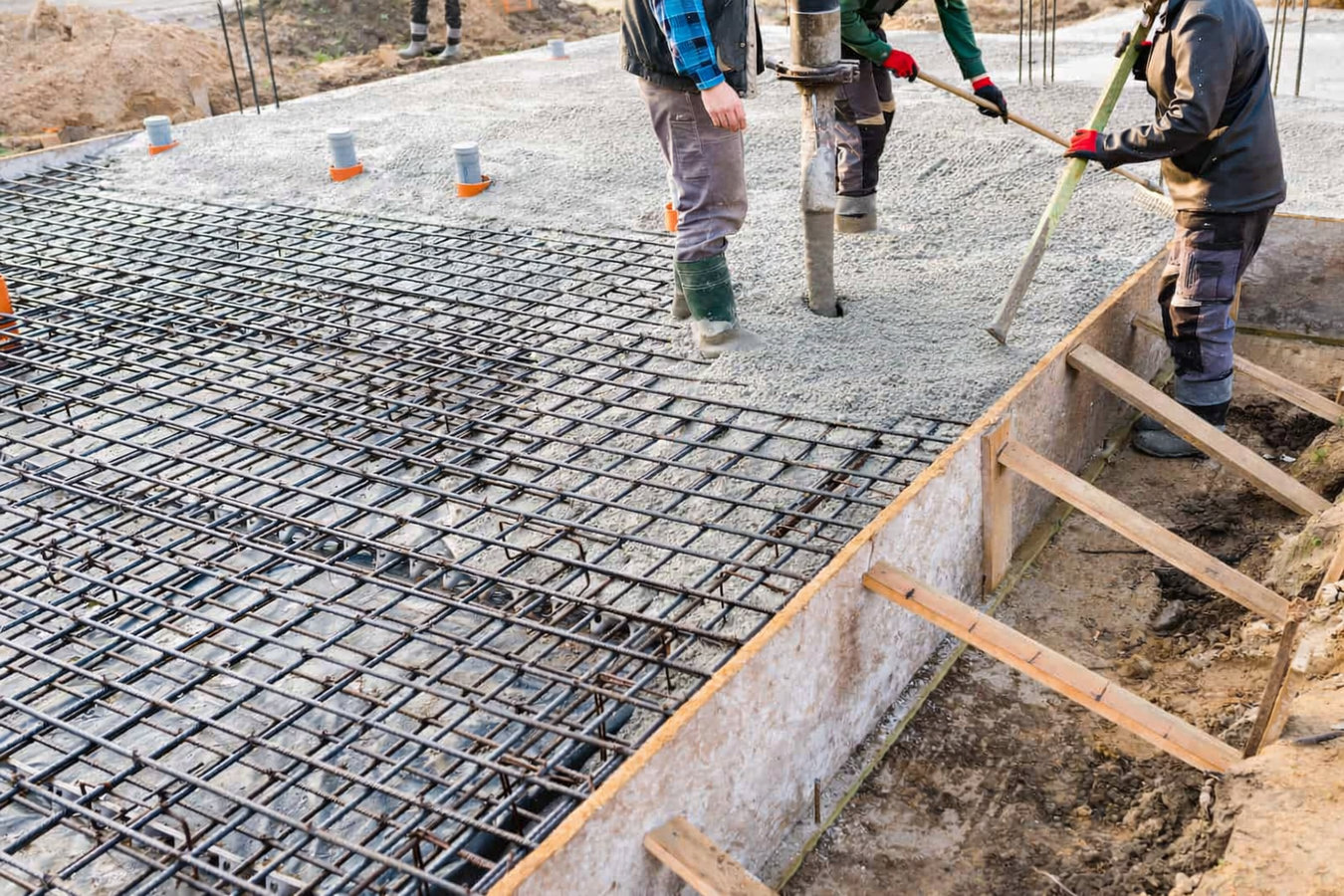
Foundation installation in Abilene means excavating the site, conditioning the clay soil, building forms, placing steel reinforcement, pouring the concrete, and managing the curing period - most residential projects run three to seven days of active work plus two to three weeks total from permit application to the start of framing.
In Abilene and across West Texas, nearly all residential foundations are slab-on-grade: a flat concrete pad poured directly on prepared soil rather than a raised basement or crawl space. That approach suits the region's climate well, but the clay soil underneath it is one of the most challenging substrates in Texas. Soil that was not properly prepared before the pour will cause the foundation to crack and shift far sooner than it should - often within the first few years after construction.
Whether you are building new construction on a vacant lot, replacing a failed foundation on an older Abilene home, or adding a structure to an existing property, the process starts at the soil level. If your project requires deep-anchored structural support below the slab, our concrete parking lot building service can accommodate larger commercial-grade pours. For homeowners considering repairs to an existing structure, our foundation raising service addresses slabs that have settled or shifted.
If interior doors that used to swing freely now drag or refuse to latch, or windows have become hard to open, the frame of your home may be shifting. In Abilene, this is often caused by clay soil expanding and contracting under your foundation through the seasons - it is one of the earliest and most reliable signs that your foundation needs professional attention.
Small hairline cracks in drywall are common and usually harmless, but diagonal cracks that fan out from the corners of door frames or window openings are different. These patterns typically indicate one part of your foundation has moved more than another - a direct result of the uneven soil movement common in West Texas. If you see these cracks growing over a season, do not wait.
Walk through your home and look where walls meet the ceiling and where baseboards meet the floor. Gaps that were not there before - especially wider on one side of a room - suggest the structure is no longer sitting level. This kind of movement is gradual, so comparing photos taken a year apart can help you see what your eye might miss day to day.
Abilene's clay soil does not drain well, and when rainwater collects against the foundation rather than draining away, it accelerates the swelling and shrinking cycle that damages slabs. If water sits against your home's exterior for hours after a storm, that drainage problem is actively working against your foundation and should be corrected before or during new foundation work.
We install foundations for new residential construction, additions, accessory dwelling units, and replacement projects throughout the Abilene area. Every project begins with the soil - we grade the site, treat and compact the clay to reduce future movement, and build a gravel base that allows moisture to drain rather than pool under the concrete. That preparation is what the finished foundation will rest on for the life of the structure, and we do not shortcut it.
Steel reinforcement - rebar in a grid pattern or welded wire mesh depending on the structural requirements - is placed before every pour and verified by the city inspector before any concrete arrives. The American Concrete Institute sets the national standards for this work; we follow them on every project regardless of project size. For projects where the site needs significant grade correction before foundation work can begin, our concrete parking lot building team handles larger grading scopes. For homeowners dealing with an existing foundation that needs correction rather than replacement, see our foundation raising service.
We pull every required permit from the City of Abilene Development Services, schedule city inspections at the required stages, and provide you with permit close-out documentation when the project is complete. That paperwork is your evidence that the foundation was built to code - it matters at resale and any time you need to make a claim related to the structure.
Complete slab-on-grade installation for a new single-family home - from permit through final city inspection.
Foundations for room additions, detached accessory structures, or in-law units that require a fully permitted, inspected base before framing.
Full demolition of a failed existing slab, soil remediation, and new pour - for properties where repair is no longer viable.
Slab installations for small commercial structures, warehouses, or utility buildings that require a heavier reinforcement spec and commercial-grade finish.
Abilene sits on expansive clay soils that swell when they absorb water and contract dramatically when they dry. This is the single biggest variable in every foundation project in this part of West Texas, and it is why homeowners cannot simply apply the same approach used in San Antonio or Houston. The soil preparation required here - moisture conditioning, compaction in controlled lifts, proper edge beam depth - adds time and cost, but it is the difference between a foundation that lasts decades and one that begins showing distress within a few years of construction.
The housing stock in Abilene's established neighborhoods - particularly in areas around North Abilene and near Hardin-Simmons University - was largely built between the 1940s and 1970s, when foundation construction standards were less rigorous than they are today. Homeowners on those streets are increasingly dealing with foundations that have reached the end of their useful life, and replacement is the right path when the original slab can no longer be reliably repaired. Abilene's hot, dry summers also affect the construction timeline: the National Association of Home Builders notes that hot-weather concrete placement requires specific management steps that experienced local crews know how to execute.
We install foundations for homeowners throughout the region, including properties in Abilene, Wichita Falls, and Killeen. Each area has its own permit requirements and soil characteristics that we account for before quoting any project.
We respond within 1 business day to schedule a free on-site visit. The contractor looks at the site, assesses soil and drainage conditions, and provides a written estimate covering all labor, materials, soil prep, and permits before you decide anything.
We apply for the required City of Abilene building permit - approval typically takes a few business days to a week. Once the permit is in hand, site clearing, grading, and clay soil conditioning begin. This is the phase most homeowners do not see but that matters most.
Wooden or metal forms define the slab shape. Steel reinforcement is placed inside the forms and a city inspector visits to verify the layout before any concrete is poured. This inspection is required and is one of the protections you are paying for.
Concrete is delivered and poured in a single continuous pour for residential slabs. We protect the fresh slab from Abilene's summer heat during curing. A final city inspection confirms the work meets code, and you receive the permit close-out documentation.
Free on-site estimate. Permits and inspections managed for you. Written price before work begins.
(325) 283-1159We have installed foundations across Taylor County and understand the specific soil preparation that West Texas clay requires. Experience from other Texas markets does not transfer here - the ground behaves differently, and the prep has to match it.
We handle the City of Abilene permit application and coordinate every required city inspection as a standard part of the contract. You receive permit close-out documentation when the job is done - that record protects your investment at resale.
Concrete poured in Abilene's summer heat without a plan dries too fast and ends up weaker than spec. We schedule early-morning pours and apply curing protection as a built-in part of every warm-weather project - not an optional add-on.
Every project starts with a written scope covering labor, materials, site prep, and permits. The number you agree to before work starts is the number on your final invoice - we notify you immediately if any unexpected condition changes the scope.
Every one of these points connects to a real outcome for you. The soil preparation reduces your risk of cracking and shifting years down the road. The permit documentation gives you legal protection and makes the home easier to sell. The hot-weather plan means the concrete cures the way it was designed to, not the way Abilene's summer forces it to. Before hiring any foundation contractor, you can verify their standing with the Texas Department of Licensing and Regulation at no cost.
Heavy-duty concrete pours for commercial parking surfaces, including subgrade preparation and drainage planning.
Learn moreCorrection of foundations that have settled, shifted, or sunk - when replacement is not required but the current level is no longer acceptable.
Learn moreSummer is the hardest season to pour concrete in West Texas - contact us now to lock in your project date before the heat arrives.