Loading...
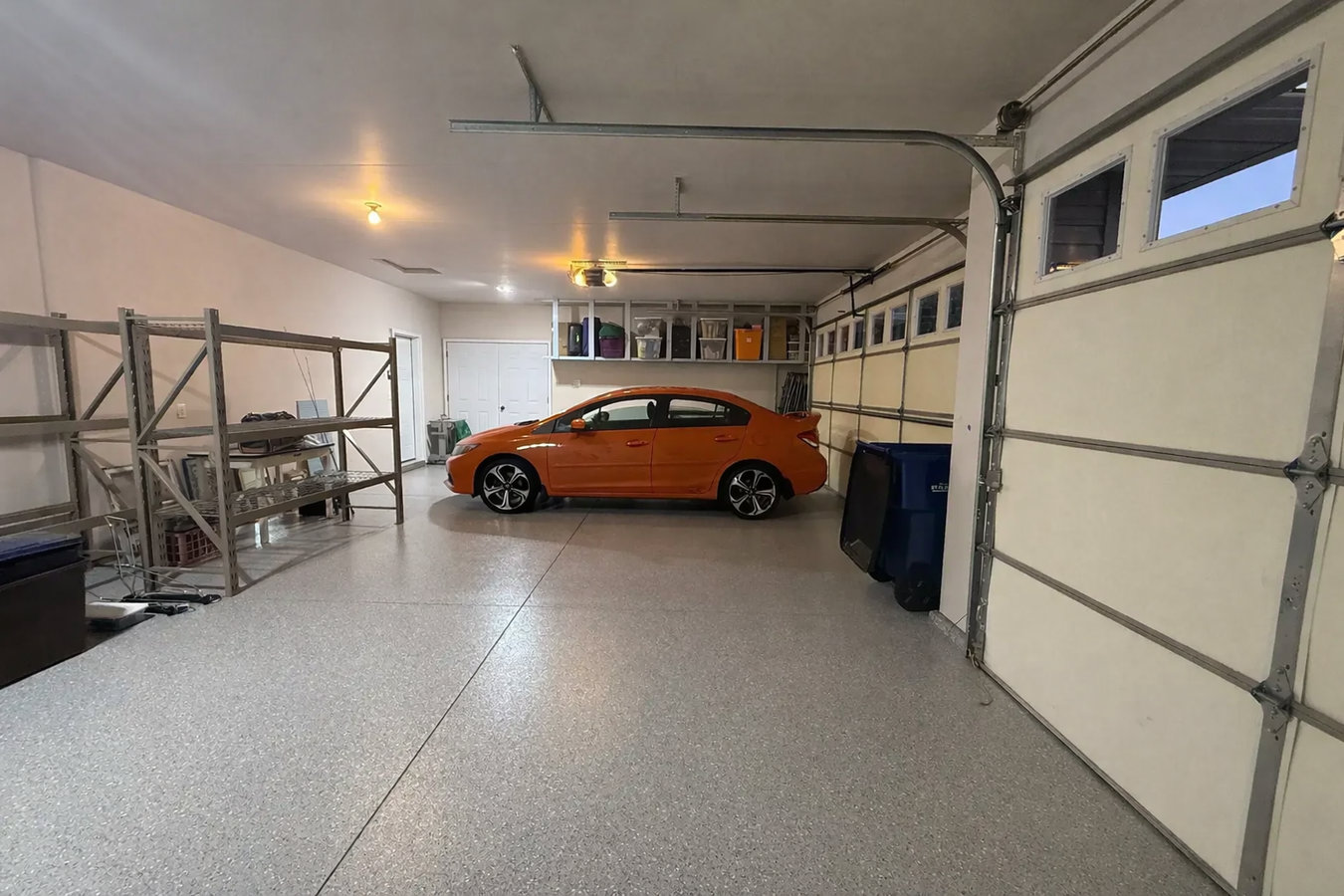
Cracked, sinking, or crumbling garage floors are a common problem in Abilene. We replace and install garage floor concrete that handles the clay soil, the heat, and real daily use.
Garage floor concrete in Abilene starts with removing the old slab if one exists, preparing and compacting the ground underneath, setting a steel reinforcement grid, and pouring a fresh slab that is leveled and finished by hand - most jobs run two days on-site, though you should plan to keep vehicles off the floor for at least a week afterward.
The step that matters most in Abilene is the one you never see: what happens before the concrete is poured. The clay-heavy soil across Taylor County swells when it rains and shrinks during dry spells, and a slab set on improperly compacted ground will crack and shift within a few years. Taking that prep step seriously is what separates a floor that lasts 30 years from one that needs replacing before your car hits 200,000 miles.
If you are thinking about upgrading the appearance of the finished floor, our decorative concrete service covers finishes and color options that can be incorporated at the time of the pour. For interior concrete floors throughout the home, see our concrete floor installation service.
Cracks wider than a hairline - especially ones running diagonally or growing over time - mean the ground underneath has shifted. In Abilene, this is almost always related to clay soil expanding and contracting with moisture changes. Cracks that go all the way through the slab usually mean it is time for a full replacement, not a patch.
If one corner looks lower than the others, or water pools in spots after rain, the base underneath has likely settled or eroded. This is a common problem in older Abilene homes where the original base was not compacted properly. Uneven floors only get worse over time and become a tripping hazard in a busy garage.
If the top layer is peeling, pitting, or breaking off in chunks, the surface has deteriorated past the point where patching makes sense. Oil drips, road chemicals, and the freeze-thaw cycles Abilene occasionally experiences accelerate this kind of breakdown. Once it starts, the concrete underneath is usually compromised as well.
A gap opening between your garage floor and the wall or door threshold means the slab has moved. In Abilene's clay soils, edge separation is a reliable sign that the ground has shifted enough to affect the whole slab. Left alone, those gaps let water in and speed up further damage under the floor.
We handle every scope of garage floor work in Abilene - full slab removal and replacement, new pours on homes that never had a finished floor, and heavy-duty pours for homeowners who need extra thickness for trucks, workshops, or storage loads. Standard residential garage floors are poured four inches thick. If you park a heavy-duty pickup, haul equipment, or use the space as a workshop with heavy machinery, we will recommend a five- or six-inch pour upfront so you are not calling us back a few years from now.
Every floor we pour includes a steel reinforcement grid embedded inside the slab. In Abilene's expansive clay soils, that grid is what holds the slab together when the ground shifts underneath it. We also cut control joints into every finished floor - the shallow lines you see on the surface - which give the concrete a planned place to flex slightly rather than cracking randomly across the garage. Surface finish options run from a standard broom texture to a smoother trowel finish for homeowners who want a floor that is easier to clean or plan to apply epoxy coating later.
In Abilene, the City of Abilene Development Services requires a building permit for new garage floor slabs. We pull the permit and coordinate the city inspection on your behalf - that step is part of every project we take on, not an optional add-on.
The right choice for most Abilene homeowners - broom finish, control joints, and steel reinforcement. Built for two-car garages with normal vehicle traffic.
Suited for homeowners who regularly park trucks, work vehicles, or heavy equipment. Extra thickness handles the added load without cracking.
For homeowners who want the space to look as good as it functions. Smooth, broom, or epoxy-ready finishes available at the time of pour.
The correct path when the existing floor has shifted, cracked through, or was originally poured too thin. Starts with a clean slate every time.
Abilene sits on clay-heavy soil that expands and contracts with every rain and dry period - and West Texas goes through real extremes of both. That constant movement is the single biggest reason garage floors crack and shift here more than in other parts of the state. Floors poured in the 1960s and 1970s in established neighborhoods like Elmwood and the streets near Hardin-Simmons University were typically thinner and laid without reinforcement, which means many of them are now well past their practical lifespan regardless of how they look on the surface.
Abilene's summer heat adds another layer of difficulty. Temperatures regularly exceed 100 degrees from June through August, and concrete poured in extreme heat dries too fast on the surface before the inside has fully cured. That surface-drying weakens the slab from the start. We schedule garage floor pours for early morning hours in summer and use additives that slow the drying process - two steps that cost nothing extra but make a real difference in long-term strength.
We serve homeowners across the Abilene area, including customers in Abilene, Brownwood, and San Angelo. The soil conditions and climate challenges are similar across all of West Texas, and we approach every project with those local realities in mind.
Reach out by phone or form and we respond within 1 business day. We will ask about your garage size and current floor condition, then schedule a free on-site look before giving you any numbers.
We measure the space, check the existing slab, and look for signs of soil movement or drainage issues. You receive a written estimate breaking out every line item: demo, base prep, reinforcement, pour, and finish.
Once you approve the estimate, we pull the required City of Abilene permit before any work begins. This usually takes a few business days. You do not need to contact the city yourself - we handle it entirely.
We remove the old slab if needed, compact the base, set the steel reinforcement, and pour the concrete. Control joints are cut while the surface is still workable. The city inspector signs off on the finished job before we close out.
Free written estimate. No pressure, no obligation. We respond within 1 business day.
(325) 283-1159We are not a regional chain with rotating crews. Every job is staffed by people who live and work in West Texas and understand how Abilene's clay soil behaves through rain, drought, and triple-digit summers.
We pull the required City of Abilene permit before any concrete is poured and coordinate the final inspection. That means a city inspector independently verifies the work was done correctly - not just our word that it was.
Every garage floor we pour includes a steel reinforcement grid embedded in the slab. In Abilene's expansive clay soils, this is not a premium upgrade - it is the difference between a floor that lasts 30 years and one that cracks in five.
You get a written, itemized estimate covering every part of the job before any work begins. No verbal agreements, no line items that appear on the final invoice as surprises. If the scope changes, we tell you before we proceed.
Concrete work in Abilene is not the same as concrete work in Dallas or Houston. The soil moves differently, the summers are hotter and drier, and the permit process is specific to the city. We have worked in this market since 2022 and every project we complete stays in the ground - we do not chase work across the state and disappear. You can verify contractor licensing through the Texas Department of Licensing and Regulation before signing anything with any contractor.
Add color, pattern, or a polished finish to your garage floor or any outdoor surface at the time of the original pour.
Learn moreInterior concrete floor pours for living areas, workshops, and commercial spaces throughout the Abilene area.
Learn moreSpring and fall book out fast in Abilene. Lock in your date now and get a written estimate before any work begins.