Loading...
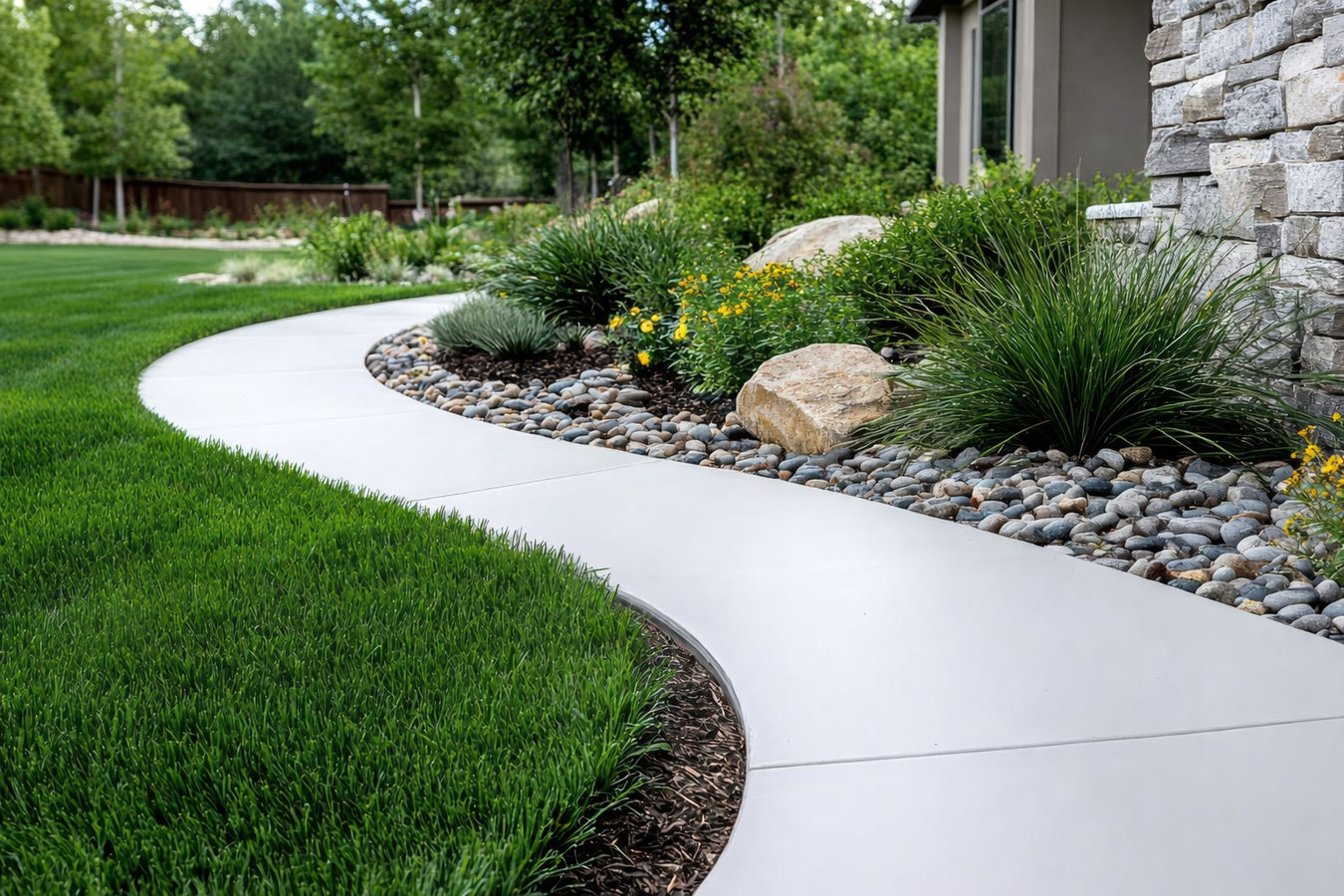
A cracked or uneven sidewalk is a hazard for your family and everyone who walks past your home. We build new sidewalks in Abilene that handle the local clay soil, summer heat, and tree roots - and we handle the permits so you do not have to.
Concrete sidewalk building in Abilene means removing the old surface if there is one, compacting the ground underneath, setting forms, and pouring a properly finished slab - most residential jobs are completed in one to two days on-site, with the surface ready for foot traffic within 48 hours.
The quality of the finished sidewalk depends more on what happens underground than what you can see on the surface. Abilene's clay soil expands in the rain and contracts in dry weather, and a sidewalk poured on poorly prepared ground will start cracking and shifting within a few years. We compact the base, set control joints at regular intervals, and time our pours to avoid the worst of Abilene's summer heat - all things that affect how long your sidewalk holds up.
Many homeowners also want a connecting driveway apron or a decorative finish that matches other surfaces on their property. Our concrete driveway building service handles that scope, and if you want a decorative finish on the sidewalk itself, our garage floor concrete page covers the decorative surface options we use on interior and connected flatwork.
A clear step or lip between two sections of your sidewalk is a tripping hazard and a sign the ground underneath has shifted. In Abilene, this is very common because the clay soil expands and contracts with the seasons. Once a section has heaved or settled noticeably, it rarely levels itself back out on its own.
Hairline cracks are normal and mostly harmless. But cracks wider than about a quarter inch, diagonal cracks across a section, or cracks that seem to be getting longer each year mean the structural integrity of that section is compromised. In Abilene's climate, these cracks tend to worsen quickly because water gets in, the soil beneath shifts, and the damage accelerates.
If the top layer of your sidewalk is peeling off in chips or feels rough and gravelly underfoot, the concrete has started to break down from the inside out. Years of intense UV exposure combined with water getting into small cracks weakens the slab, and once the surface starts going the damage spreads faster than most homeowners expect.
Many of Abilene's older neighborhoods have mature trees planted close to sidewalks. Over time the roots grow under the slab and push sections up. You can usually see this as a raised section with a crack running along the edge where the root is pushing. Patching over this kind of damage does not work long-term - the root will keep growing and the problem will return.
We build new concrete sidewalks for residential properties across Abilene - front-yard walks from the street to the front door, side-yard paths connecting the driveway to a gate, and backyard utility paths. Standard residential sidewalks are poured four inches thick with a broom finish for traction. When a sidewalk crosses a driveway apron, we pour that zone thicker - typically six inches - to handle the vehicle weight without cracking over time.
Replacement projects include full demolition of the old slab and haul-away of the broken concrete before the new pour begins. We factor any tree roots into the project plan before the crew shows up - not as a surprise on job day. Control joints are cut at regular intervals on every sidewalk we pour, giving the concrete a place to flex rather than crack randomly across the surface. For homeowners who want a decorative option, our concrete driveway building service coordinates stamped or colored finishes across multiple connected surfaces. If a project includes a detached garage path or functional pad, our garage floor concrete service handles that as part of the same scope.
A standard four-inch broom-finished walk from the street or driveway to your front door. The most common request in Abilene's older neighborhoods.
Full demolition of an old, cracked, or root-damaged sidewalk followed by a new pour built on a properly compacted base.
Connecting paths between a driveway, garage, gate, or patio - typically three to four feet wide with a broom finish for traction.
A textured, colored finish that matches or complements an existing stamped patio or driveway for a cohesive look.
The most common reason sidewalks fail in Abilene is the same as the most common reason driveways and patios fail here: the clay soil underneath. Abilene's soil swells when it rains and contracts during the dry spells West Texas is known for. That constant movement puts stress on concrete from below, and a sidewalk poured on a poorly prepared base will start cracking and heaving within just a few years. This is especially visible in Abilene's established neighborhoods north and south of downtown, where sidewalks from the 1950s and 1960s are well past the point of patchwork repair.
Summer heat adds a second challenge. When temperatures exceed 100 degrees - which happens regularly in Abilene from June through August - concrete can dry too fast on the surface before it has fully set underneath. That leads to surface cracks and a weakened top layer. Experienced contractors in this area schedule pours for early morning and use additives to slow the drying process. This is not a premium service; it is the standard practice required to produce a sidewalk that holds up. We apply these same standards on every job, whether in Abilene proper or in surrounding communities like Brownwood and Stephenville.
Sidewalks that run along the front of your property or connect to a public walkway may fall in the city right-of-way, which requires a permit from the City of Abilene Development Services before work can begin. We handle this on your behalf. The ADA accessibility standards also inform minimum width and slope requirements for sidewalks near public rights-of-way, and we build to those standards as a matter of course.
Reach out by phone or form. We respond within 1 business day to schedule a free on-site visit. We will ask about the area size, existing surface conditions, and any concerns like tree roots or drainage.
We measure the area, check soil conditions and drainage, and note anything that could affect the project. You get a written estimate covering demolition, haul-away, base prep, pour, and finish - before any work begins.
If your sidewalk is near the street or in the city right-of-way, we handle the City of Abilene permit application on your behalf. We confirm your project start date once permitting is resolved - typically within a few days.
We break up and haul away the old surface, compact the base, set the forms, and pour the concrete. Control joints are cut at regular intervals. In summer, we schedule pours for early morning to protect the surface from Abilene's heat.
Free on-site estimate. Written quote before any work starts. We handle permits and respond within 1 business day.
(325) 283-1159We have worked on sidewalks across Abilene's neighborhoods since 2022 and understand how the local clay soil behaves through wet and dry seasons. That experience shapes how we prepare every site before a pour.
Sidewalks near the street involve city permit requirements. We manage the application with the City of Abilene Development Services and ensure the work is done to the standards required - so you are not called to redo it later.
Pouring concrete in Abilene's summer heat without a plan leads to cracked surfaces within a season or two. We schedule warm-weather pours for early morning and use curing compounds to protect fresh concrete from drying too fast.
Your estimate includes demolition, haul-away, base prep, the pour, finishing, and cleanup. No verbal agreements, no line items that appear on the final bill that were not discussed upfront.
A concrete sidewalk is not a complicated project, but cutting corners on base preparation or pour timing in Abilene's climate produces a surface that fails much sooner than it should. The American Society of Concrete Contractors outlines the base preparation and curing standards we follow on every pour - they exist because doing this right the first time saves everyone time and money.
Interior and connected slab pours for garages, shops, and utility areas - finished with the same base-prep standards as our exterior sidewalk work.
Learn moreFull driveway pours and replacements that can be coordinated with a new sidewalk project for a cohesive front-yard result.
Learn moreSpring and fall slots fill fast. Call now or submit a request and we will get back to you within 1 business day.