Loading...
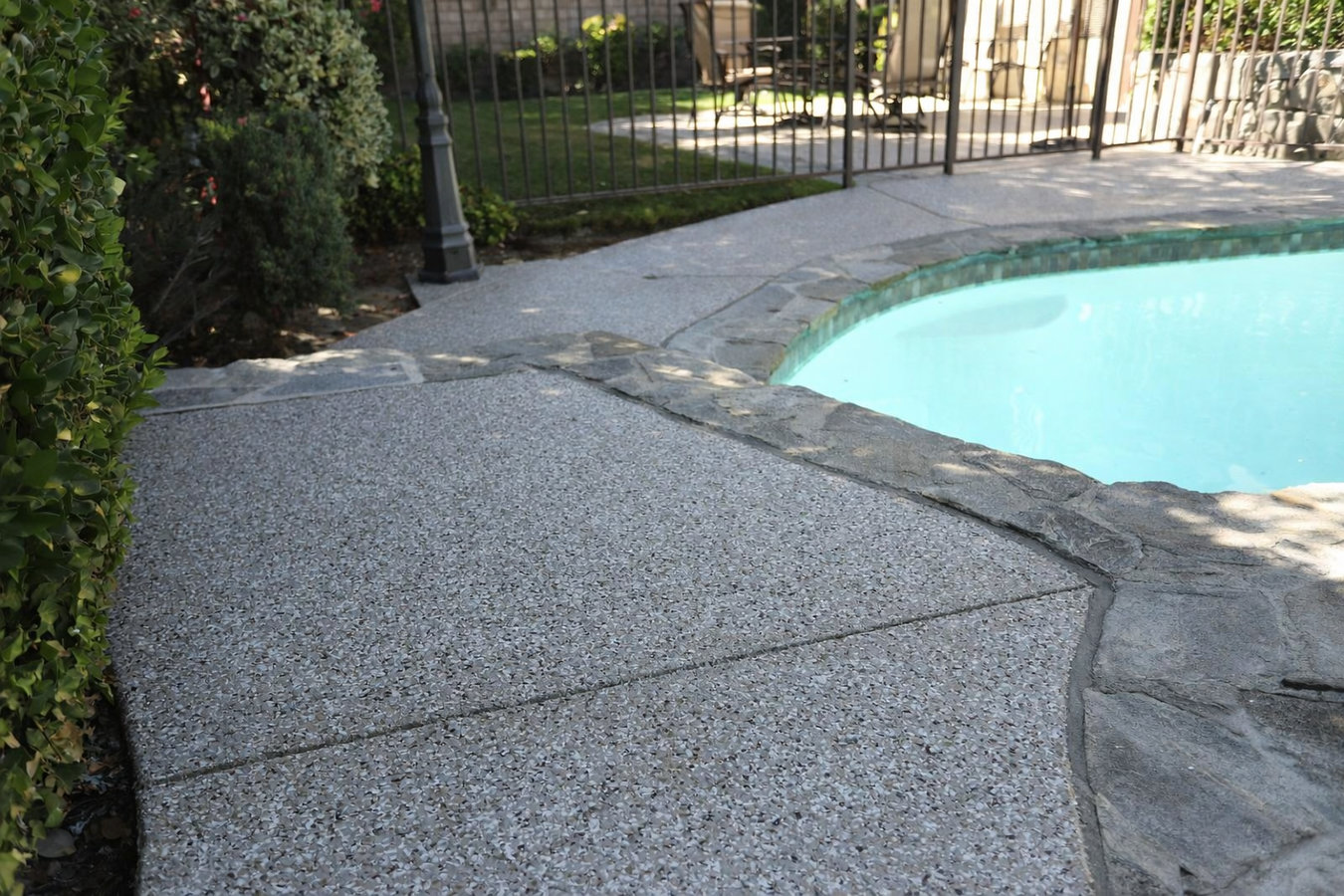
A pool deck that cracks every spring or burns bare feet all summer is not doing its job. We build Abilene pool decks that handle clay soil movement, triple-digit heat, and heavy seasonal use without failing in a few years.
Concrete pool decks in Abilene cover the area surrounding your pool, providing a safe, finished walking surface - most installations take two to four days on-site, with the concrete needing about a week before the space is fully back in use.
The work starts below the surface, not on top of it. Abilene sits on expansive clay soil that swells when wet and shrinks when dry. That movement is the main reason pool decks crack and shift here, and a new deck poured on an improperly prepared base will develop the same problems within a few years. Grading for drainage, compacting the soil, and cutting control joints in the right places are what determine how long your deck actually lasts.
Homeowners who want to extend their outdoor living space beyond the pool area often pair this project with our concrete patio construction service, which handles adjacent seating and entertaining areas with the same preparation standards. For decorative finish options that coordinate across your outdoor space, see our concrete steps construction work.
If you have patched the same cracks more than once and they keep coming back in the same spots, the ground underneath is moving. In Abilene, clay soil shifts with every wet and dry cycle, and surface repairs alone will not stop that. The deck may need to be replaced with proper base preparation to address what is happening below.
After a rain, walk the perimeter of your pool and look for spots where water sits rather than draining away. Standing water near the pool edge works its way under the slab and accelerates the soil movement that causes cracking and settling. This drainage problem compounds over time and can eventually affect the pool structure itself.
A rough, flaky, or pitted surface means the top layer is breaking down, a condition called spalling. In Abilene's intense sun and heat, an unprotected or poorly sealed concrete surface deteriorates faster than in a milder climate. Once spalling starts across a meaningful area, it spreads quickly and the surface becomes harder to clean and less safe to use.
If you can feel a bump or drop where sections of the deck meet, or if the edge near the pool has shifted, the slab has moved. This is a tripping hazard, especially for children running in a wet pool area. In Abilene's clay soil, slab movement tends to worsen with each summer drought cycle rather than stabilize on its own.
We install new pool decks and replace failing ones across the Abilene area. Every project starts with a ground assessment, because the finish you choose matters far less than what happens underneath. Broom-finished concrete in a lighter tone is our most common recommendation here because it stays cooler in summer, provides grip on wet feet, and holds up well against UV exposure without requiring resealing every year.
If you prefer a more decorative surface, stamped concrete gives your pool area the look of stone or tile without the long-term maintenance cost of loose materials around water. Color and pattern choices happen during the estimate, before any concrete is ordered, so the finished result matches what you had in mind. Control joints are always included, positioned to manage how the slab expands and contracts through Abilene's seasonal temperature swings. For homeowners whose projects also include adjacent outdoor space, our concrete patio construction service and concrete steps construction work can be coordinated to deliver a consistent finished look across the whole backyard.
The most practical choice for Abilene - lighter colors stay cooler underfoot and the texture provides grip on wet feet year-round.
Suits homeowners who want the look of stone or pavers without the long-term maintenance that loose materials require around water.
Full removal of the failing surface, proper base preparation, and a new pour - the right solution when patching has stopped working.
Good fit for homeowners in HOA communities who need a specific color or finish to match their neighborhood guidelines.
Abilene averages over 100 days per year above 90 degrees Fahrenheit, and summer temperatures regularly push past 100. That kind of heat bakes unprotected concrete and can cause the surface layer to flake or fade faster than it would in a milder part of the state. A pool deck built here without a UV-resistant sealer and a finish chosen for heat performance is one that will need attention much sooner than expected. The finish decision is not cosmetic; it affects how comfortable the surface is to use during the hottest months.
The soil is the other major factor. Shrink-swell clay runs through much of Taylor County, and it behaves exactly as the name suggests: swelling during Abilene's spring rains and shrinking back during the long dry summers. That cycle puts constant stress on any concrete slab sitting on top of it. Pool decks in neighborhoods throughout Abilene and out toward San Angelo show this pattern regularly. Proper base compaction and joint placement are the answer, not thicker concrete alone.
Abilene has seen significant residential growth in areas like southwest Abilene and the Wylie corridor, where HOAs are common. Many of those associations have guidelines specifying acceptable colors or finishes for outdoor surfaces including pool decks. If you live in one of those neighborhoods, the right contractor will help you choose a finish that clears HOA approval before the concrete is poured, not after. We also serve homeowners in Brownwood and surrounding communities where the same soil conditions apply. The American Concrete Institute publishes technical standards for pool deck construction that inform how we spec and build every project.
Reach out by phone or through the contact form. We respond within 1 business day to discuss your pool area, the condition of the existing surface, and what you want the finished deck to look like.
We visit your property to measure the deck area, assess soil and drainage conditions, and walk you through finish options. You receive a written quote that lists scope, materials, and timeline before any work is committed.
We submit the permit application to the City of Abilene Development Services on your behalf. Permit processing typically adds a few business days to two weeks. Once approved, you get a confirmed start date.
Old concrete is removed first if needed, then the ground is graded and compacted. Concrete is poured and finished in one continuous session. Control joints are cut before the surface sets. In summer we schedule early-morning pours to beat the heat.
Free on-site estimate, written quote, no obligation. We reply within 1 business day.
(325) 283-1159Every job is staffed by people who live and work in West Texas. We know exactly what Abilene's clay soil and triple-digit summers do to pool deck slabs, and we build accordingly.
We carry general liability insurance and workers' compensation coverage on all jobs. Ask any contractor you speak with for a current insurance certificate before work starts on your property.
We handle the permit process with the City of Abilene so you do not have to. Permitted work is inspected and on record, which protects your investment and makes your home easier to sell down the road.
Every project starts with a free on-site visit and a written quote covering scope, materials, and timeline. No verbal agreements, no surprise charges once the job is underway.
Texas contractor registration and current insurance certificates are available on request before any project starts. We have built a track record of completed jobs across Abilene neighborhoods precisely because we handle the permit process, show up on schedule, and build to the standards that inspectors here actually check. The Texas Department of Licensing and Regulation is the right place to verify any contractor's registration before you commit to a project.
New concrete steps leading to your pool area, entry, or back porch, built with the same soil preparation that keeps your deck from sinking.
Learn moreExtend your outdoor living area with a poured concrete patio that connects seamlessly to your pool deck and handles West Texas conditions.
Learn moreSummer fills up fast - the sooner you get on the schedule, the sooner you have a pool deck that actually holds up through the season.